Biography
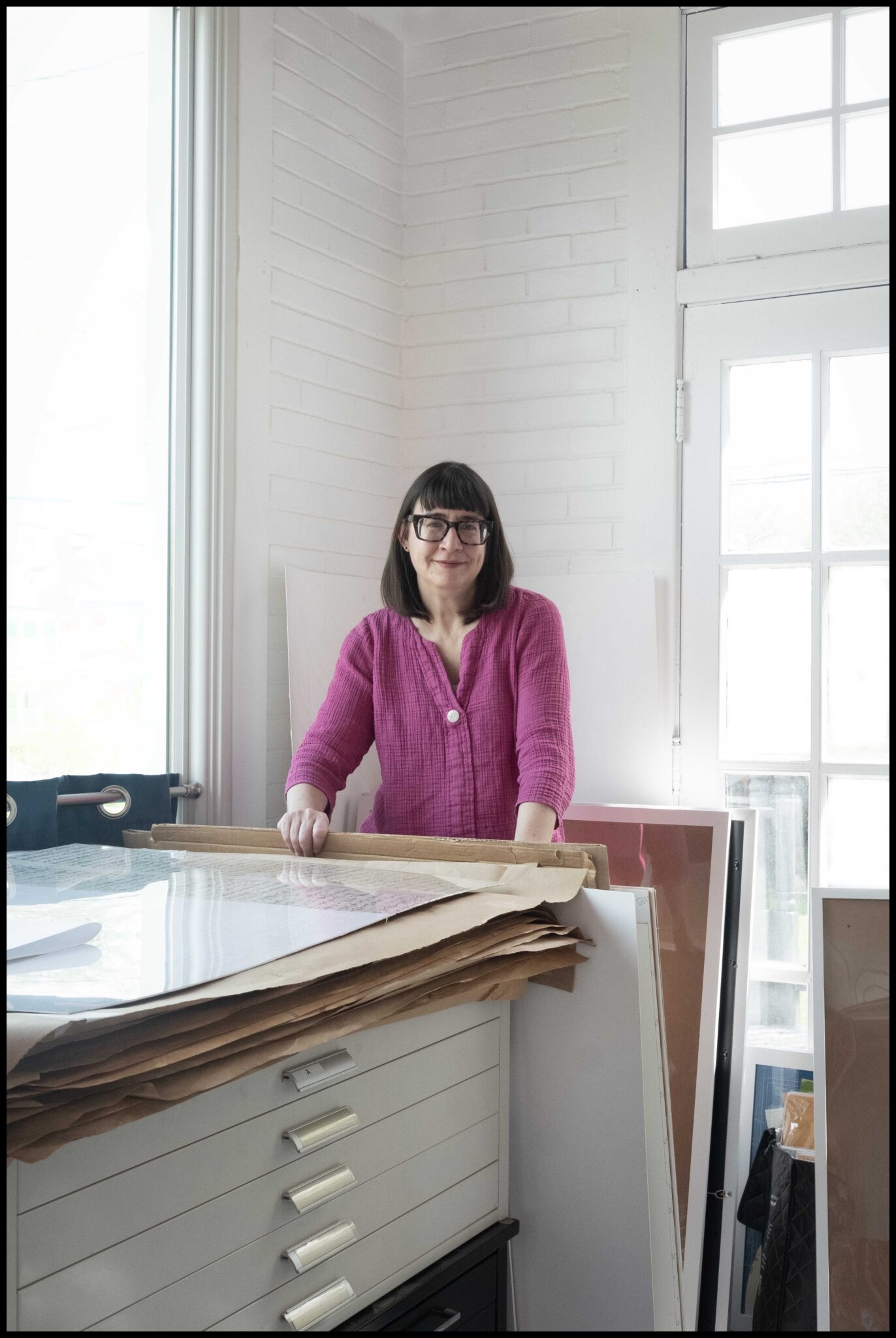
Emily Krill is an antique paper collage artist based in Pittsburgh who creates vibrant, large-scale collages out of antique paper. She works with old ledgers, player piano rolls, blueprints, legal documents, and children’s homework, searching out the small scraps of paper ephemera that were never meant to last, but somehow did.
Her work moves easily from abstraction to florals, landscapes, still lifes, and imagined interiors. Every piece begins with a simple belief. Art should bring joy to the spaces where people live.
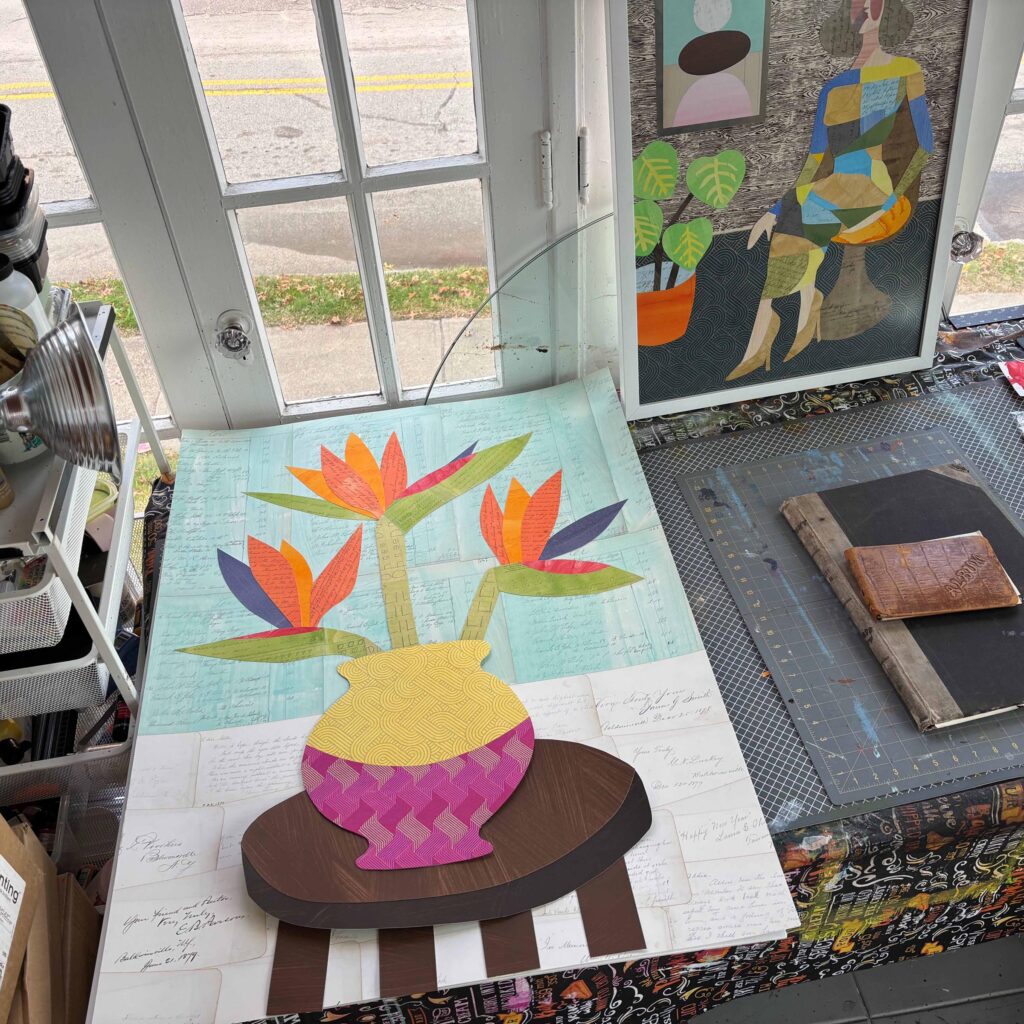
Emily’s collages feel alive because they carry both history and play. A canceled check becomes an ocean. A railroad share becomes a mountain, and handwritten homework finds its way into a vase of flowers. The past and the present meet in a way that feels fresh, warm, and full of movement.
Originally from Pittsburgh, Emily spent seventeen years in Brooklyn, a city that shaped her eye for mixing the old with the new. She returned home with a deeper appreciation for the stories found in everyday materials and a desire to turn those stories into something vivid and contemporary.
Emily’s work has been featured in Petrichor, Postindustrial, New Jersey Monthly, and Contemporary Collage Magazine. Her exhibitions include mossArch, the Brooklyn Waterfront Artists Coalition, Atithi Studios, The Erie Art Museum, and The Portal, and her work is held in the collections of BNY Mellon and the Pittsburgh Foundation. She is represented by ZYNKA Gallery.
Emily continues to collect, cut, paint, and layer long-forgotten papers into artwork that feels joyful, inviting, and full of life.
Artist Statement
My work begins with a love of paper ephemera and the stories it carries. I use antique materials to build large collages that feel fresh, colorful, and full of life. These fragments once served mundane everyday purposes. Now they become part of a new image and a new story.
I am interested in how history lingers in ordinary things. A single piece of paper once held real value. A railroad share could feed a family. A handwritten lesson once marked a child’s progress. When these scraps find their way into my work, they bring their past with them. I like the idea that something forgotten can become meaningful again.
My process starts with collecting. I look for paper with character and signs of the human hand. I paint each piece with ink to bring out hidden tones and create a richer palette.
When I build a collage, I work by feel. I arrange and layer the papers until the image finds its rhythm. Some pieces stay abstract. Others become still lifes, interiors, landscapes, or citrus fruits, which I return to often because they carry a natural sense of joy.
In the end, I want my work to feel warm, grounded, and energetic. I want people to look closely and see both the past and the present in each piece. My collages invite viewers to slow down, notice the details, and feel the spark that remains inside these old materials