Edo-Period Waka Poetry Manuscripts
Clouds gather and scatter across the mountain,
yet the mountain remains.
Winds rise and fall,
yet the river keeps its course.
So it is with life-
the world changes endlessly,
while the heart learns to endure.
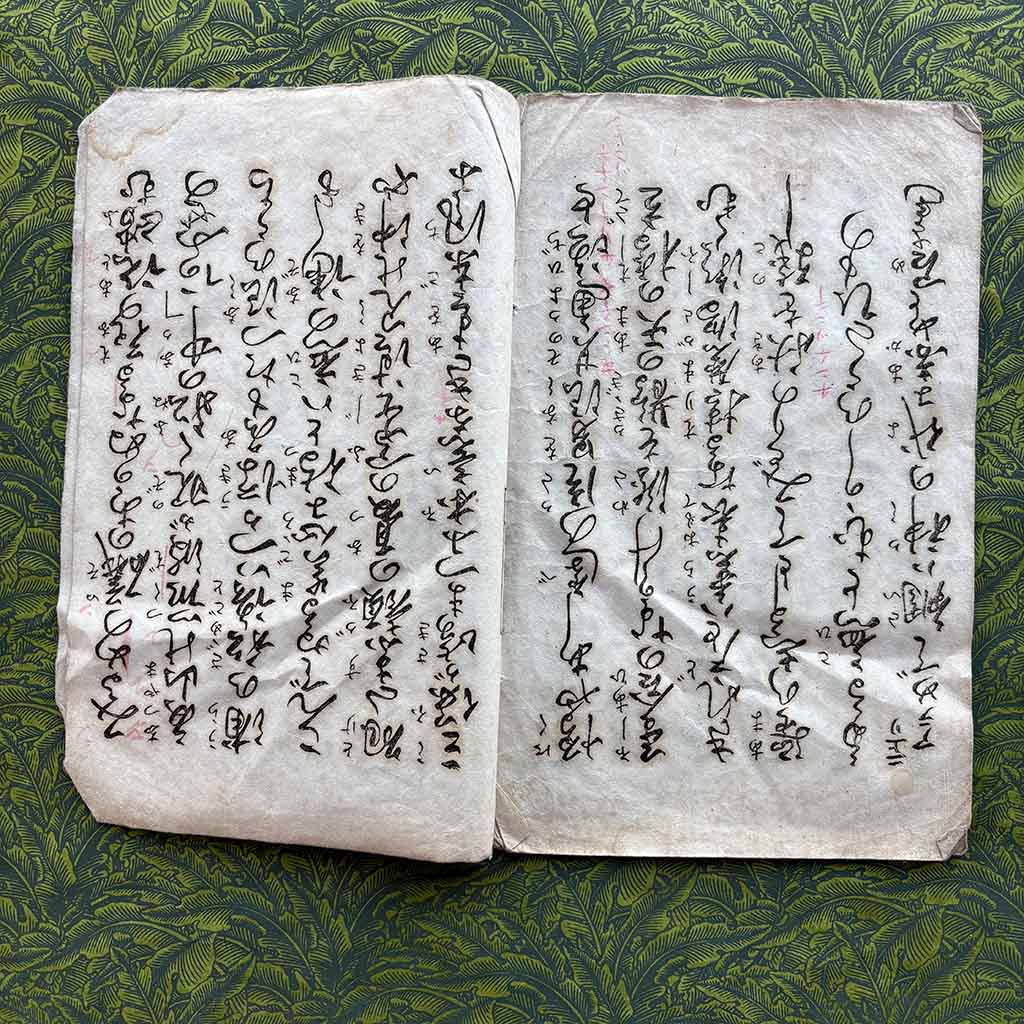
Poetry often hovers somewhere between language and image. Even when we cannot read it, we recognize its rhythm. The movement of ink across paper begins to resemble landscape: a rising line like a mountain ridge, a scattering of marks like wind or rain. For someone drawn to antique handwriting, the boundary between text and abstraction can dissolve entirely. At that point the words become something closer to asemic writing—marks that feel meaningful even when their meaning is out of reach.
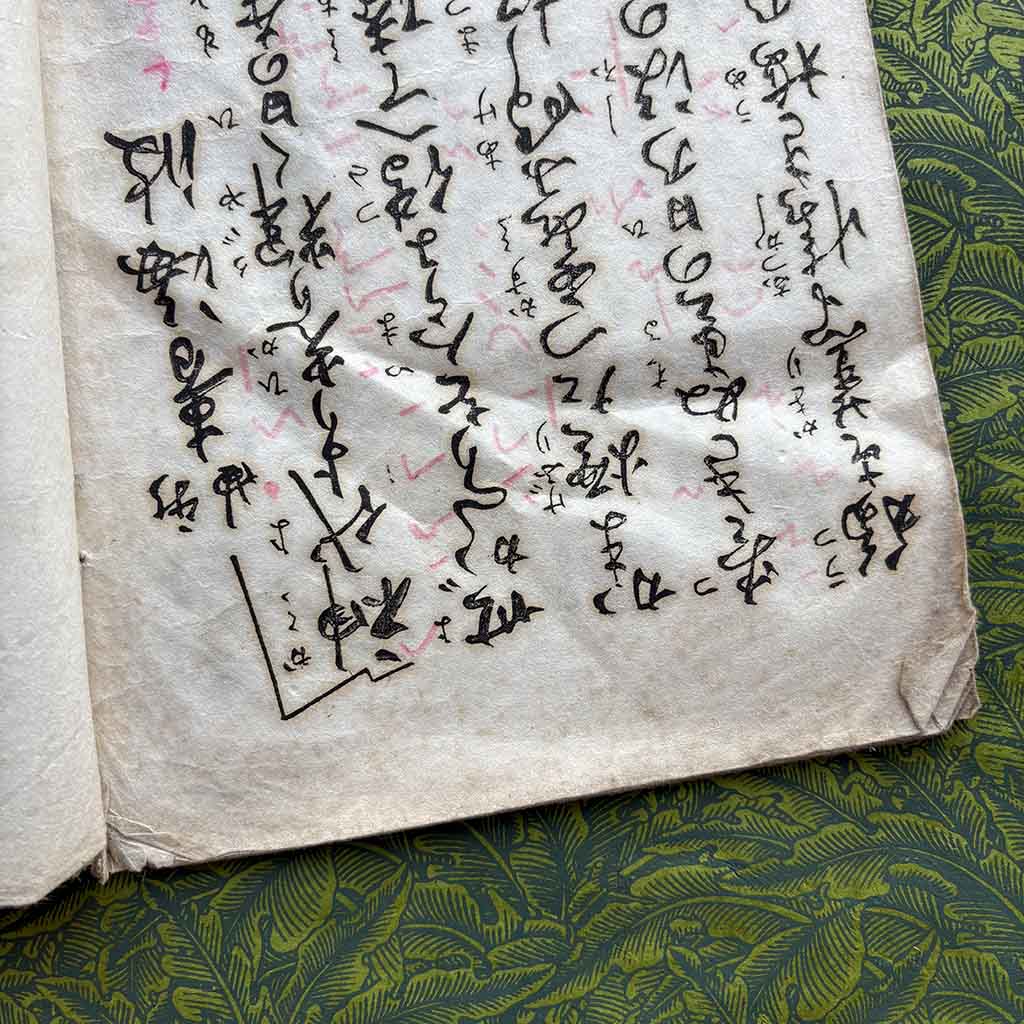
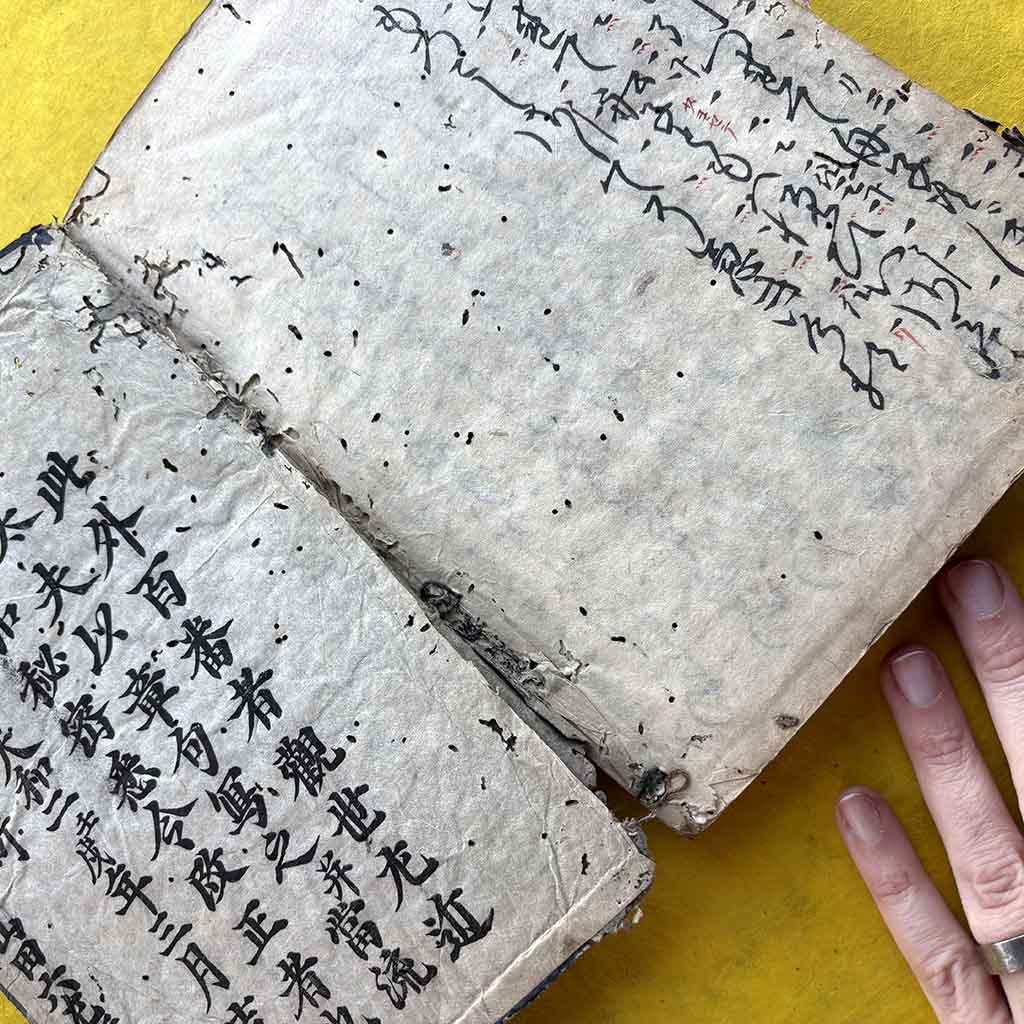
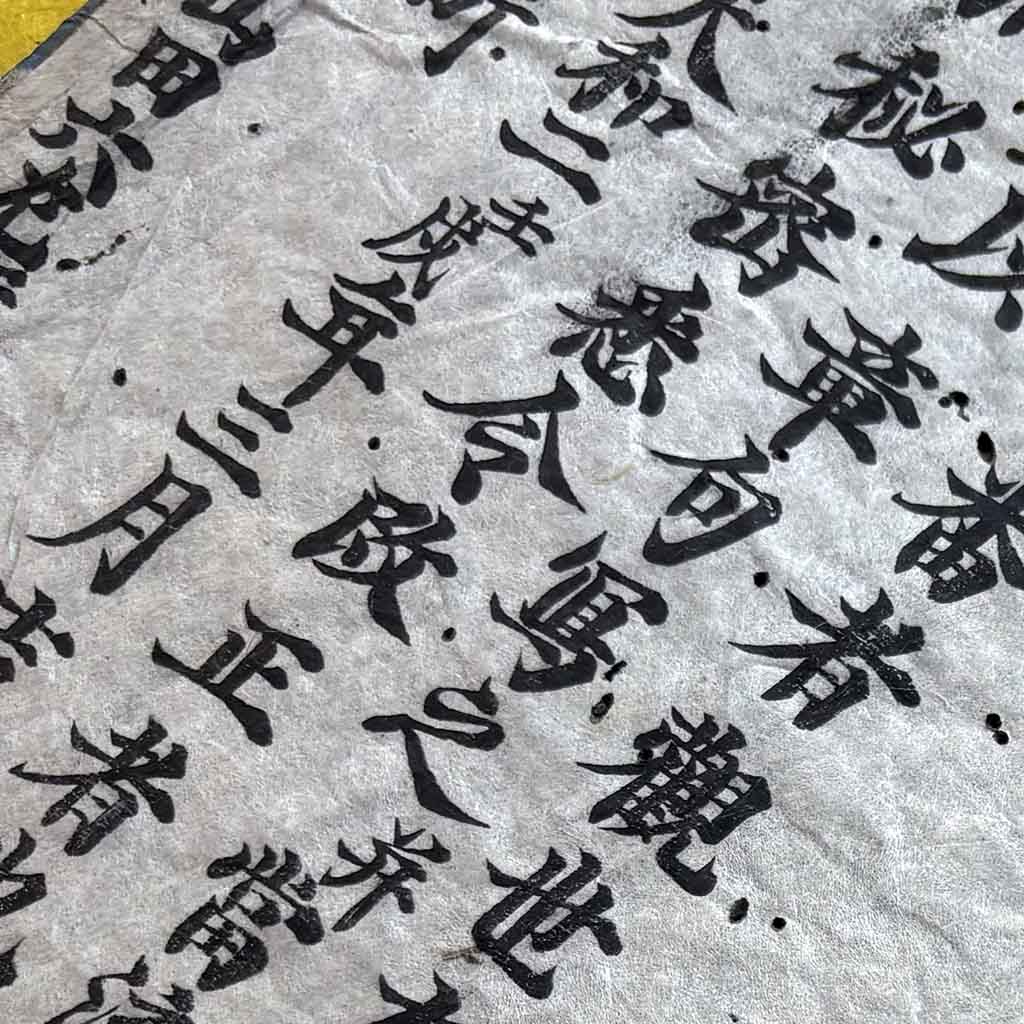
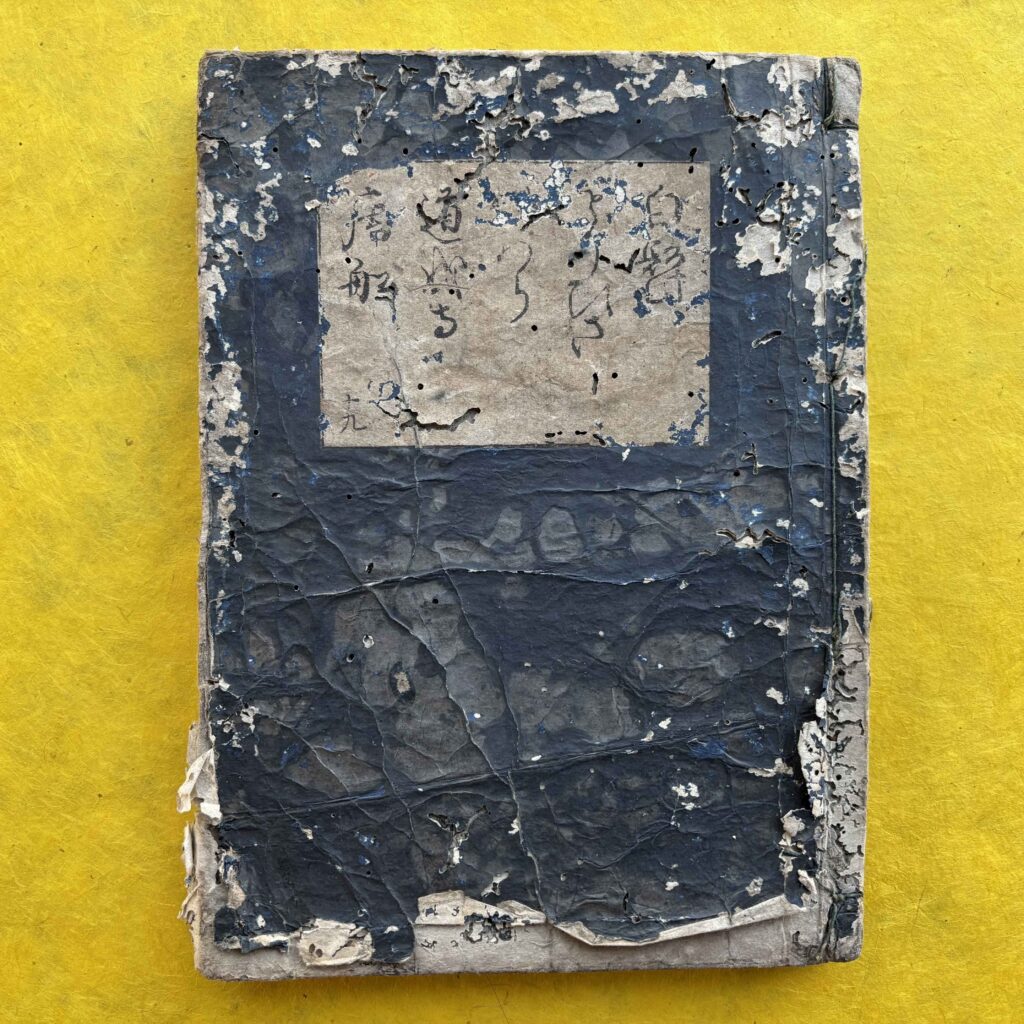
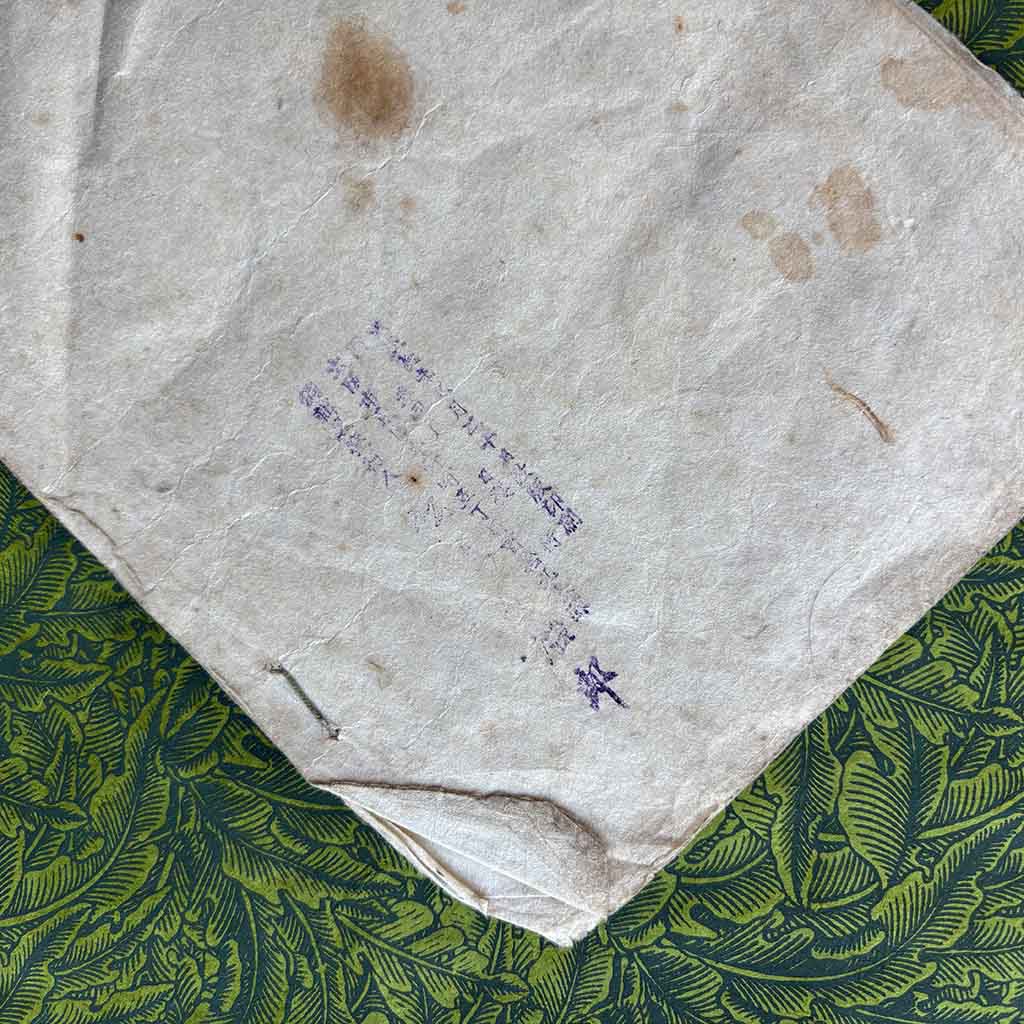
That experience is exactly what drew me to two small handwritten Japanese manuscripts I recently acquired. The books date to the late Edo period, likely from the 1800s, and are filled with pages of flowing brushwork. The writing is not in modern Japanese script but in kuzushiji, a highly specialized cursive used in historical manuscripts. Kuzushiji compresses characters into sweeping gestures that modern readers, Japanese speakers included, generally cannot decipher without training. To fully translate the text in this little notebook would require the eye of a scholar who studies these scripts.
Across several pages, faint red editorial marks appear beside the black ink writing. These corrections suggest the manuscript may have been used as a study text, perhaps copied by a student practicing poetry or corrected by a teacher. The red strokes move delicately through the calligraphy, adding another layer of motion to the page.
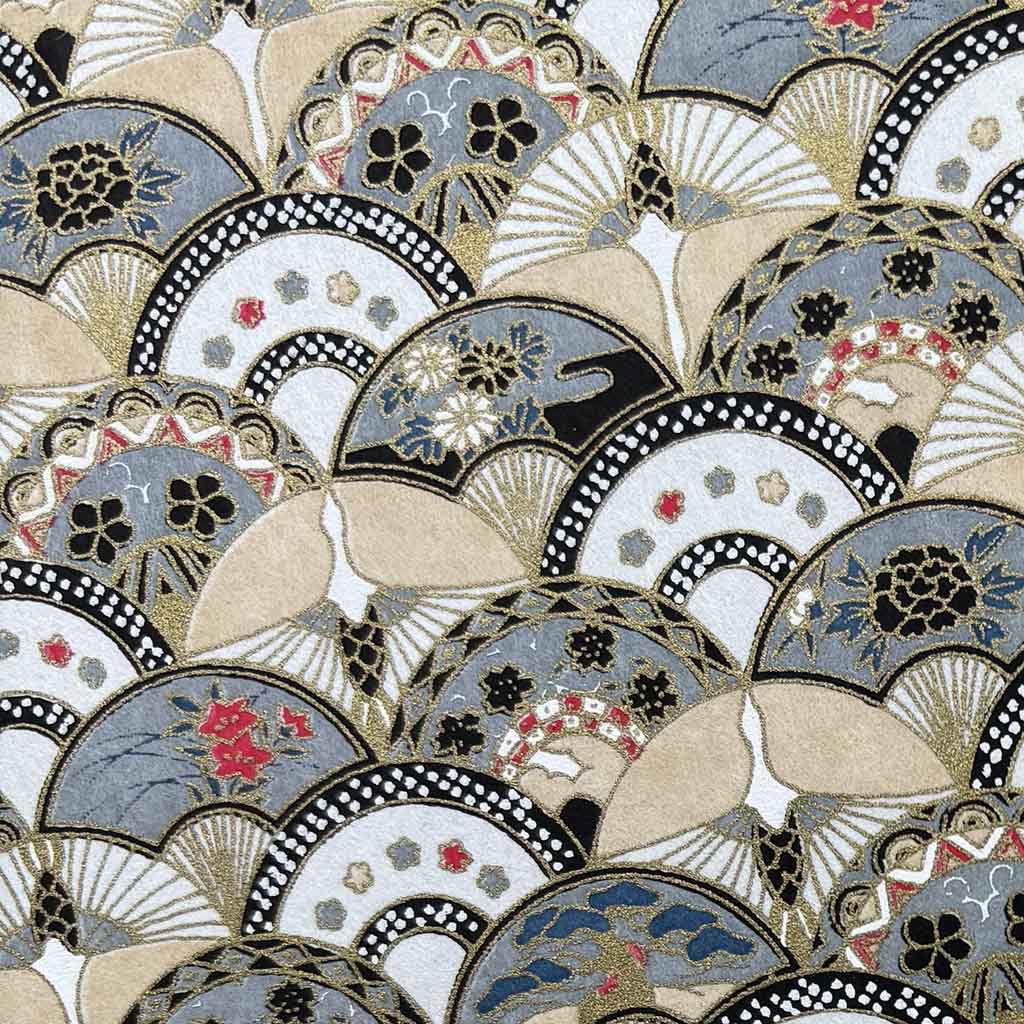
One element remains clearly legible even to a non-specialist: the phrase written on the cover, 青海波 (Seigaiha). Translated literally, it means “Blue Ocean Waves.” The phrase refers to the endless pattern of waves across the sea and is also the name of a traditional Japanese decorative motif built from repeating arcs. In poetry it evokes continuity, movement, and time passing in steady rhythms.
Holding the manuscript, the exact poems remain locked within the elegant complexity of kuzushiji. But the experience of the pages is immediate. Lines of ink rise and fall like distant hills. The red corrections flicker through the text like wind through water. Even unread, the writing still carries its music.