Japanese to English Notebook
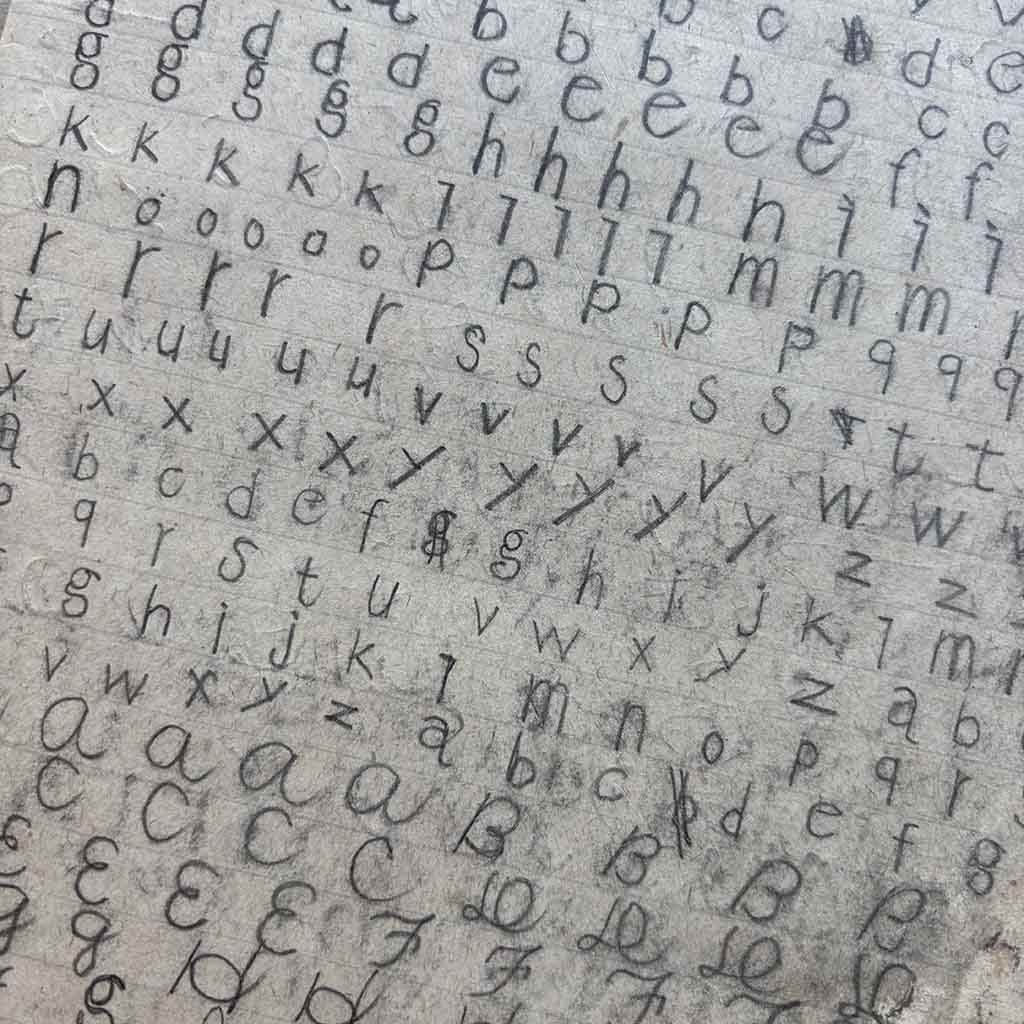
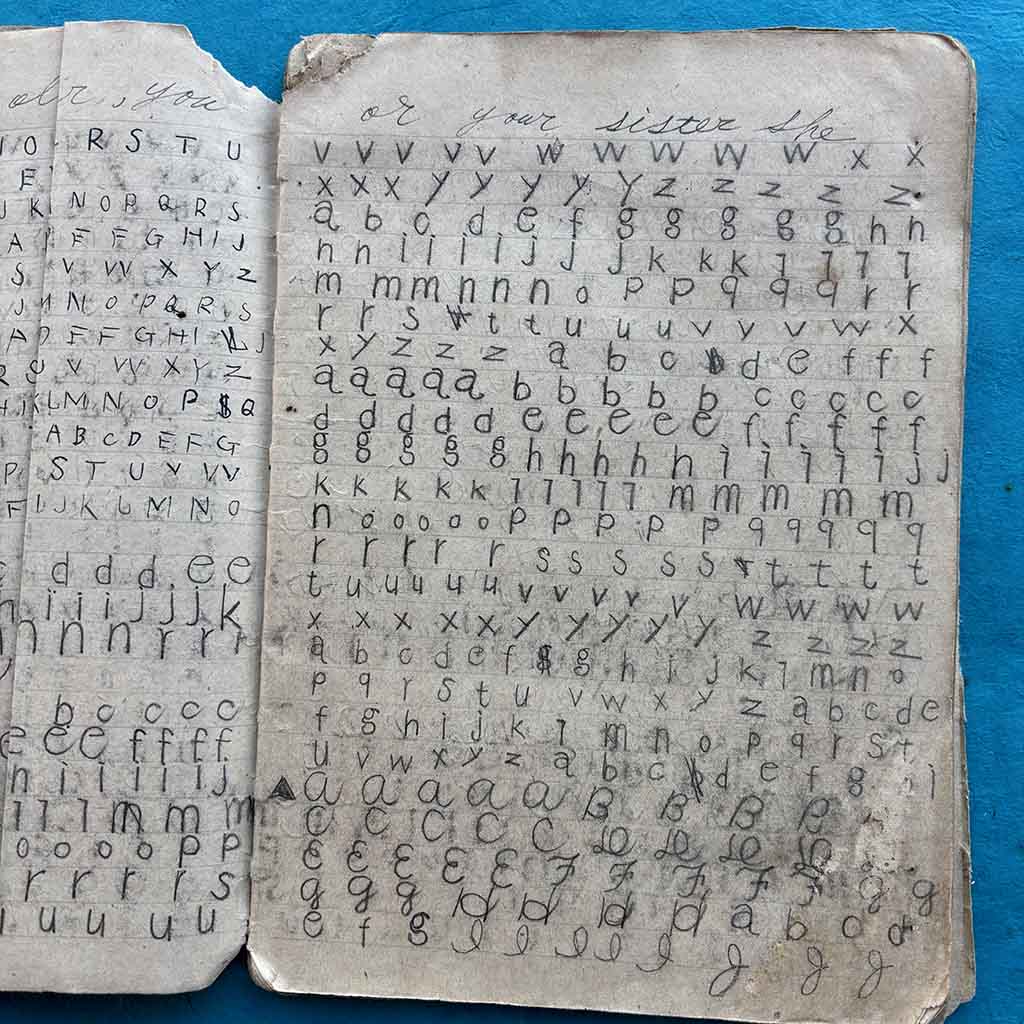
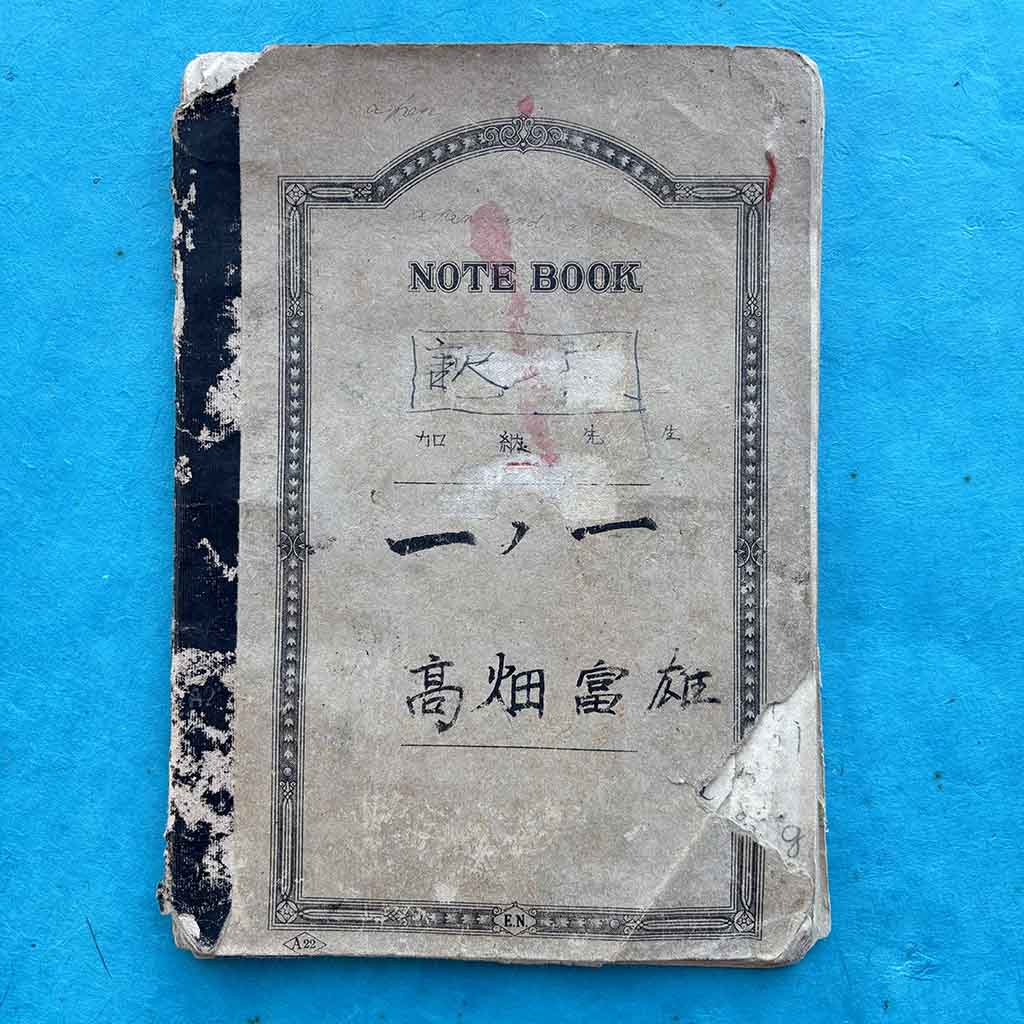
This mid-20th-century notebook belonged to a Japanese schoolboy learning to speak English. Its pages are filled with careful repetitions of the alphabet, rows of upper and lowercase letters marching across the paper in disciplined lines. The graphite shifts from light to dark as pressure changes, certain letters retraced, corrected, attempted again. On some pages, the exercises move from pure form to language: “Who is the gentleman?” “He is Mr. Brown.” “What is he?” The sentences feel almost theatrical, as though language itself is a small stage on which identity is being introduced for the first time.
What moves me most are the quiet irregularities. A letter leans too far forward. A loop collapses in on itself. A word is spelled almost correctly, hovering between comprehension and invention. The spellings are not always precise, and the grammar sometimes stumbles, but that is precisely where the poetry lives. The phrases are simple and declarative, yet they carry an undercurrent of aspiration. To write “Yes, you are” again and again is to practice belonging. To ask “Who is the gentleman?” is to rehearse a way of seeing and naming the world beyond one’s own.
Like so much ephemera, this notebook was never meant to last. It was a tool, a stepping stone toward fluency, meant to be outgrown and discarded. And yet here it is, preserving the fragile moment when language was still new, when every letter required concentration and courage. The imperfect spellings and wavering lines feel deeply human, evidence of a mind stretching toward another culture, another sound system, another way of thinking. In these pages, learning itself becomes visible. The notebook is not simply a record of English words, it is a portrait of a young student practicing his way into a wider world.